

UAD 3.6 replaces a form-based appraisal report with a data-first structure. Every field, photo, and comment is designed to be machine-readable, comparable, and reviewable at scale. For lenders and AMCs, that changes how appraisal review is configured, how risk is triaged, and how vendors and systems interact.
This guide focuses on one question: what UAD 3.6 means for your review processes and how to prepare your teams and technology, with selected examples of how ValueLink is supporting the transition in the background.
UAD 3.6 in Plain Language for Review & QC Teams
In the current UAD 2.6 environment, review teams still think in terms of discrete forms: 1004, 1073, 1025, and so on, supported by a PDF and a UAD XML file. Even with some automation, the review process is largely document-first.
UAD 3.6 changes that model. Fannie Mae and Freddie Mac have replaced legacy forms with a single, dynamic Uniform Residential Appraisal Report (URAR) that adjusts to property type and scope of work, built on the MISMO 3.6 standard. Form numbers are secondary now. The defining element is the dataset. That dataset becomes significantly richer. Appraisers report more granular details about condition and quality, room-level characteristics, energy-efficiency features, and site/location attributes as discrete fields rather than loosely structured commentary.
Delivery changes as well. ENV files are retired for 3.6. Instead, appraisers deliver a ZIP file that contains XML data, a PDF rendering, and individual image files. The ZIP package is the work product; the XML and images are what downstream systems, and QC engines are expected to consume and analyze.
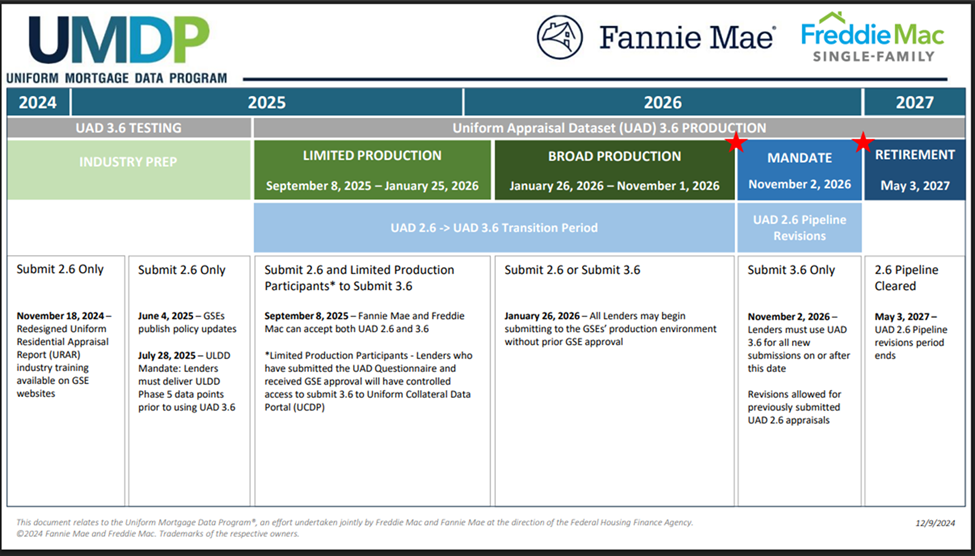
Figure 1 Source: https://sf.freddiemac.com/docs/pdf/uad_joint_announcement_oct_2024.pdf
The rollout is phased. Limited production with selected lenders began in September 2025, broad production opened on January 26, 2026, UAD 3.6 becomes mandatory for new GSE appraisal submissions on November 2, 2026, and UAD 2.6 is fully retired after pipeline cleanup in May 2027.
For review and QC teams, the core shift is from reading forms to validating a structured dataset, with a PDF rendering attached.
What UAD 3.6 Changes for Lenders’ Review Workflows
For lenders, UAD 3.6 is primarily a workflow and integration exercise with compliance implications. The main points of impact are order intake, vendor routing, QC rules, and UCDP submission.
Order intake moves from form numbers to attributes
Under UAD 2.6, LOS and appraisal platforms are typically configured around product codes: 1004 for a detached SFR, 1073 for a condo, and so on. Under UAD 3.6, order configuration needs to be driven by assignment attributes, not form labels.
At minimum, your intake flow should capture and pass through:
- Property type
- Valuation type (traditional, desktop, hybrid, exterior-only)
- UAD report type (URAR, completion, update)
- Loan Type
- Whether the loan will use UAD 2.6 or 3.6 during the transition window
In ValueLink, this is handled through an attribute-to-product mapping layer. Administrators map UAD attributes to internal product codes so existing fee tables and SLAs can remain in use. Front-end users still see familiar product names, while the platform determines the correct UAD version and downstream workflow once the order is created.
For review and QC, that means each appraisal arrives with a defined UAD profile, and the rules engine can select the appropriate checks without manual interpretation.
Version-aware vendor routing
During the transition period, you will likely have:
- Vendors who can work only in UAD 2.6
- Vendors who are fully UAD 3.6-ready
- Vendors who can support both
At the same time, your production will gradually shift from 2.6 to 3.6 as pilots and adoption ramp up.
In ValueLink, vendor readiness is stored as structured data (for example, a UAD 3.6 readiness status at vendor or appraiser level). Assignment logic uses this status to exclude ineligible vendors from 3.6 orders, while allowing flexible routing where either version is acceptable, for a smooth transition to 3.6 only orders, eventually. The practical outcome is fewer manual checks, fewer mis-routed orders, and clearer expectations for reviewers who can see the UAD version and vendor status on each file.
Automated QC becomes version-specific
UAD 3.6 brings updated GSE rule sets with new validation relationships, error/warning behaviors, and comment-to-data expectations. The URAR structure, the way condition and quality are captured, and how commentary is tied to data elements are all different from 2.6.
QC engines therefore need to be version aware. In ValueLink CrossCheck, UAD 3.6 has a dedicated rule library modeled on GSE guidance. The engine identifies whether a report is 2.6 or 3.6 and runs the appropriate checklist with separate thresholds and expectations.
Lenders set the policy parameters: which GSE messages constitute hard stops, where overlays apply (for example, higher scrutiny on complex properties or specific products), and how exceptions should be surfaced to reviewers. The platform manages rule selection and execution per version, so reviewers do not have to manage that logic manually.
Submission to UCDP shifts to ZIP packages
Under UAD 3.6, ENV is no longer the primary delivery format. Appraisers provide a ZIP archive containing the XML report, a PDF rendering, and images. That archive is submitted to UCDP and used by downstream systems.
ValueLink’s UCDP integrations are updated so that, for 3.6 files:
- The correct ZIP package is assembled from the appraiser’s uploads
- The UAD version is tagged on submission
- SSR responses, including 3.6-specific messages, are written back to the order record
Internally, you need clear ownership for monitoring UCDP feedback, routing exceptions, and tracking resubmissions for 2.6 versus 3.6 during the dual-support period.
Data and analytics capability increases
A major benefit of UAD 3.6 is that collateral data becomes more usable across the portfolio. Condition and quality fields are more structured, energy and efficiency attributes are explicit, and site/location data can be linked more directly to external datasets.
Within ValueLink, that enables:
- Trend analysis of appraisal quality by market, product, or appraiser
- Early identification of recurring defects and warning patterns
- Feeding structured appraisal/QC data into credit risk, pricing, and vendor performance models
The data-centric report format reduces reliance on manual re-keying from PDFs and supports more reliable analytics over time.
What UAD 3.6 Changes for AMC Review Workflows
For AMCs, UAD 3.6 concentrates operational complexity. You sit between lender policies and appraiser execution, and you are accountable for correct order setup, panel capability, and first-line quality control before reports reach lender systems.
Every order carries a UAD profile
3.1 Every order carries a UAD profile
In ValueLink, each order carries an explicit UAD profile, so reviewers and appraisers understand scope and expectations up front. Typical fields include:
- UAD version (2.6, 3.6, or both)
- Living units and ADU count
- UAD report type
- Construction method (for example, site-built, manufactured, modular)
- Property valuation method (traditional, desktop, hybrid, exterior-only)
These attributes provide context to the appraiser before acceptance and allow internal teams to select the appropriate review template and delivery configuration for each client.
UAD-ready appraiser panel management
Panel management now has a UAD readiness dimension. Geography, coverage, and product experience still matter, but so does the appraiser’s ability to complete and deliver UAD 3.6 assignments.
ValueLink supports a “UAD 3.6 Ready” status at appraiser level. Once an appraiser has appropriate software, has completed your training and testing, and has delivered sample 3.6 files, they can be marked as ready. Panel managers can then filter on readiness and address coverage gaps specifically for 3.6 work. Assignment logic also respects this flag so that hybrid or desktop 3.6 orders do not go to appraisers who can only deliver legacy 2.6 files.
Rules-first QC, per lender and per version
Even with a standardized dataset, each lender will maintain its own overlays and preferences: how to treat specific warnings, when additional narrative is required, and how atypical or higher-risk scenarios should be handled.
ValueLink allows those requirements to be translated into client-specific, version-aware QC checklists. One rule set can be maintained for UAD 2.6, another for UAD 3.6, and each tied to a given client. When a report is uploaded, the correct checklist runs automatically based on the client and version.
Over time, these rule sets can be refined based on client feedback and observed defect patterns, tightening where necessary, and reducing noise where findings are consistently low value.
Delivery configured per client, not per file
Lender preferences for UAD 3.6 delivery will differ. Some will want the ZIP package as the primary artifact. Others will still rely heavily on PDF and SSR visibility for users who are less engaged with XML.
In ValueLink, delivery preferences are configured at client level. You can specify whether a client expects ZIP, XML-only, PDF plus SSR, or a combination. When a report is marked complete, the appropriate package is generated and transmitted automatically based on that configuration. This avoids file-by-file decisions and reduces revision requests.
Lenders vs. AMCs: Same Dataset, Different Responsibilities
Lenders and AMCs are working from the same UAD 3.6 dataset, but their responsibilities are different.
For lenders, the primary focus is system readiness and risk management. LOS, appraisal platforms, and QC tools must support MISMO 3.6 XML, the dynamic URAR structure, and ZIP-based delivery. Compliance teams need policies aligned with GSE 3.6 guidance, and operations leaders need to ensure reviewers, underwriters, and secondary teams can use the new format without extending turn times or increasing repurchase risk.
For AMCs, the emphasis is on operational execution and client alignment. Orders must be configured correctly for each lender’s UAD 3.6 policy; panels must be segmented between 2.6-only and 3.6-ready appraisers; QC must reflect each client’s standards; and delivery must meet client-specific packaging expectations.
ValueLink’s product set is designed to sit across that chain: Direct for lenders, Core for AMCs, and CrossCheck as a shared, UAD-aware review engine. The aim is to keep UAD 3.6’s structural complexity inside the platform while leaving lenders and AMCs free to focus on judgment, risk decisions, and service.
A Practical Readiness Plan You Can Start Now
Although the mandate date sits later in 2026, organizations that touch appraisals can prepare now. The following six-step plan keeps the work focused on review workflows rather than only on IT implementation.
Step 1: Map where appraisal data flows today
Document where appraisal data is created, modified, and consumed: order creation, data enrichment, primary review, secondary review (if any), and UCDP submission. Capture where manual re-keying, duplicate entry, or disconnected tools exist today; those points will be under the most pressure once UAD 3.6 increases data volume and complexity.
Step 2: Inventory your current QC checks
List the checks you perform today across data completeness, comp selection, reconciliation, program compliance, and collateral risk. Identify which checks are manual, which are automated, and which are tied to specific form layouts or legacy field names. This inventory becomes the starting point for a UAD 3.6-aware rule set.
Step 3: Decide your UAD 3.6 review policy
At policy level, determine your posture. Decide which GSE errors and warnings will block a file, where you want overlays beyond GSE minimums, and which review responsibilities sit with AMCs versus in-house teams. Once defined, those policies can be encoded in ValueLink CrossCheck as version-specific checklists.
Step 4: Align with your partners
Engage LOS providers, AMCs, appraiser panels, and third-party QC vendors about their UAD 3.6 roadmaps. Confirm support for MISMO 3.6 XML, ZIP intake, pilot environments, and dual 2.6/3.6 workflows during broad production. Alignment at this stage reduces unplanned issues when your 3.6 volume grows.
Step 5: Pilot UAD 3.6 in parallel
Before making UAD 3.6 your default, run a pilot where a limited set of appraisals are processed through your draft 3.6 rules and workflows in parallel with your current 2.6 process. Compare findings, exception volume, and reviewer experience. Use that feedback to adjust rule severity, refine training materials, and update procedures.
Step 6: Train, refine, then formalize
Treat UAD 3.6 as an ongoing program rather than a one-time change. Train reviewers, underwriters, and vendor managers on the new layout and key fields; update job aids to show where familiar information now appears; and gather structured feedback from early users. After a period of real-world usage, lock in your 3.6 rulesets, define change-control procedures, and manage further updates as standard policy changes.
For further assistance, refer to our Lender Readiness Checklist.
How ValueLink Supports Your UAD 3.6 Review Journey
You do not need to rebuild your review workflow from zero to support UAD 3.6. ValueLink’s focus has been to extend existing processes to accommodate the new data standard.
For lenders, ValueLink Direct and CrossCheck:
- Support attribute-driven ordering instead of form-based selection
- Maintain dual UAD 2.6 and 3.6 rule libraries in parallel
- Integrate with updated UCDP APIs for ZIP submission and SSR handling
- Expose richer appraisal data for portfolio-level analytics and vendor scorecards
For AMCs and vendors, ValueLink Core and Connect:
- Display explicit UAD profiles on each order
- Expose “UAD 3.6 Ready” status across the panel
- Enforce client-specific, version-aware QC checklists via CrossCheck
- Automate delivery of the correct ZIP/XML/PDF combination per lender configuration
As UAD 3.6 moves through its phases into full mandate, the organizations that approach it as a review-workflow redesign, not just a standards update, will see the most benefit. If you want to evaluate how a rules-first, UAD 3.6-aware review flow could look with your policies and partner mix, the ValueLink team can walk through concrete examples and help translate this framework into an implementation plan.